
Hotel Management vs Culinary Arts: Which Career Should You Choose?
Choosing a career after Class 10 or Class 12 can be difficult when you are interested in hospitality. Two popular options are hotel management and culinary arts. Both build professional skills and lead to long-term careers, but they focus on different things.
In this guide, we compare hotel management vs culinary arts by course subjects, practical skills and career options, so you can choose with confidence. Courses are available at Servo Institute of Hotel Management, Dehradun.
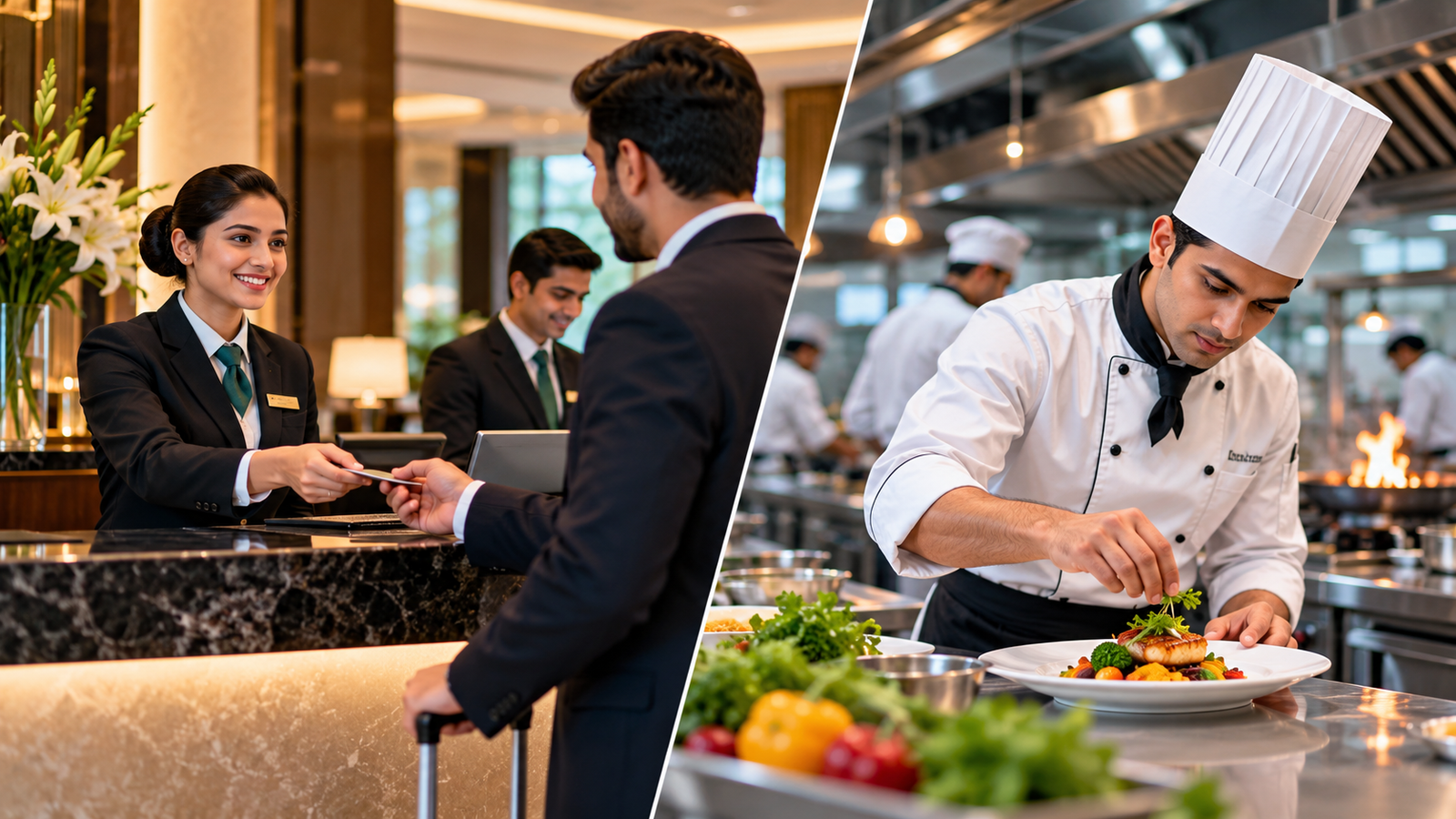
Quick answer: Hotel management is broader: it covers guest service, front office, housekeeping, food and beverage and operations. Culinary arts is more focused on cooking, food preparation, kitchen management and presentation. Choose hotel management if you enjoy working with people and want to manage operations. Choose culinary arts if your main passion is food.
What Is Hotel Management?
Hotel management is the study of how hotels, resorts and other hospitality businesses operate. It combines guest service, operational procedures, communication, teamwork and management principles to maintain service quality and efficient daily operations.

Depending on the programme, students may study:
- Front office operations and hotel reservations
- Housekeeping and room management
- Food and beverage service
- Food production and kitchen fundamentals
- Guest relations and professional communication
- Hospitality marketing and business operations
- Teamwork, leadership and customer service
For example, a front office associate helps guests with check-in, reservations and enquiries. A housekeeping associate maintains room cleanliness, while a food and beverage professional supports restaurant service. With relevant qualifications and experience, professionals can progress towards supervisory and management positions.
What Is Culinary Arts?
Culinary arts focuses on the preparation, cooking and presentation of food. It suits students who want to build professional kitchen skills and learn to prepare dishes using appropriate techniques, ingredients and equipment.

Depending on the curriculum, students may learn:
- Knife skills and ingredient preparation
- Cooking methods and kitchen terminology
- Indian and international cuisines
- Bakery and pastry fundamentals
- Food presentation and plating
- Kitchen hygiene and food safety
- Recipe preparation and kitchen organisation
- Basic food costing and waste reduction
Culinary training involves repeated practice. Students need to understand ingredients, follow recipes, maintain hygiene and prepare food consistently while managing their time.
Hotel Management vs Culinary Arts: Key Differences
The main difference is the scope of learning. Hotel management covers several hospitality departments, whereas culinary arts concentrates more deeply on food preparation and kitchen operations.
| Comparison | Hotel Management | Culinary Arts |
|---|---|---|
| Main focus | Hotel operations and guest experience | Cooking and food production |
| Course coverage | Front office, housekeeping, service and management | Cooking methods, cuisines, bakery and plating |
| Practical learning | Multiple hotel departments and guest service | Kitchen practice and food preparation |
| Key skills | Communication, organisation, coordination | Precision, creativity, kitchen discipline |
| Entry-level roles | Front office, guest service, F&B associate | Commis chef, kitchen assistant, trainee cook |
| Workplaces | Hotels, resorts, restaurants | Hotel kitchens, restaurants, bakeries, caterers |
| Career direction | Hospitality operations and management | Professional cooking and specialisation |
Neither option is automatically better for everyone. Your preferred subjects, practical interests and long-term career goals should guide your decision.
Course Subjects and Practical Training
Subjects in hotel management
Programmes generally introduce the main departments of a hospitality business: front office (guest enquiries and reservations), housekeeping (room preparation and cleanliness standards) and food and beverage service. Many also include food production, grooming, communication and hospitality management.
Subjects in culinary arts
Culinary-focused programmes devote more time to food production, cooking methods, kitchen safety, ingredients, cuisines and presentation. Some include bakery, pastry, menu planning and food costing.
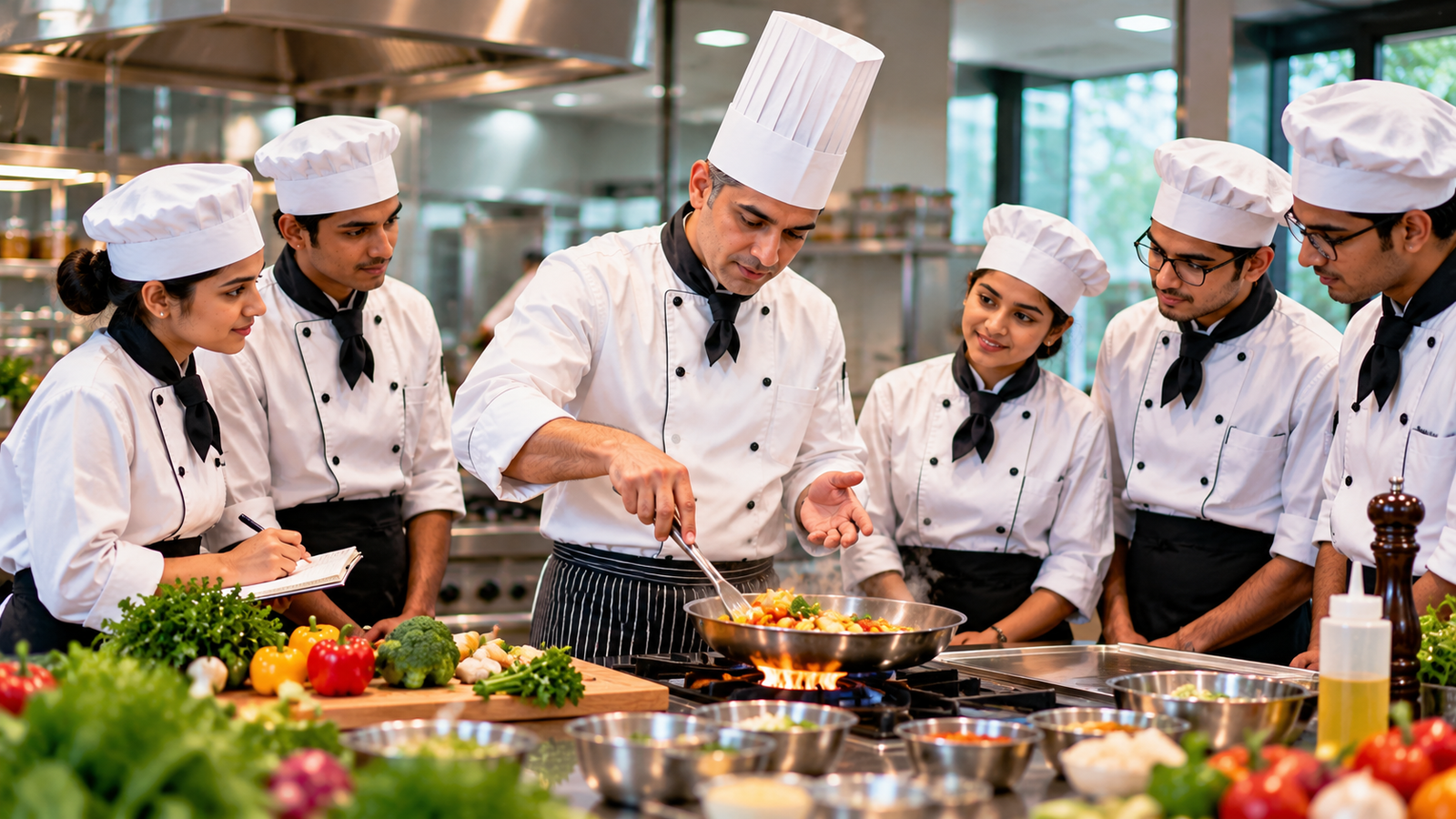
The exact subjects and amount of practical training depend on the qualification and institute. Review the actual syllabus rather than relying only on the programme name. At Servo Institute of Hotel Management, you can review the published hospitality courses and the undergraduate programme curriculum.
Career Opportunities After Hotel Management and Culinary Arts
Career progression depends on qualifications, practical performance, experience and employer requirements. Completing a course does not automatically guarantee a particular job or promotion.
After hotel management
Assists with guest arrivals, reservations and enquiries.
Helps guests with requests and service concerns.
Supports restaurant and banquet operations.
Helps maintain room cleanliness and presentation.
Learns daily procedures and coordination between departments.
After culinary arts
Supports food preparation under experienced kitchen staff.
Manages a kitchen section after gaining experience.
Specialises in desserts, pastries and related preparations.
Works with bread, cakes and other bakery products.
Helps prepare food and organise catering services.
Which Has a Better Salary?
There is no universal salary winner. Earnings vary by location, employer, job responsibilities, experience, skills and the type of hospitality business.
Hotel management professionals may progress from operational positions into supervisory roles and eventually departmental or general management. Culinary professionals may progress from entry-level kitchen roles into specialised cooking positions and senior kitchen responsibilities as their skills develop.
Instead of choosing a course based only on advertised salary figures, compare practical training, course costs, qualifications, career support and realistic entry-level opportunities.
Skills Required for Both Careers
Hotel management
- Clear communication and interpersonal skills
- Teamwork and coordination
- Time management and organisation
- Problem-solving and professional behaviour
- Attention to guest needs and service quality
Culinary arts
- Interest in cooking and food preparation
- Attention to detail and precision
- Creativity and willingness to practise
- Food safety and kitchen hygiene awareness
- Teamwork and efficiency during busy periods
You do not need every skill before enrolling. Both fields involve learning, supervised practice and continuous professional development.
Which Course Should You Choose After Class 12?
Choose hotel management if…
You want to understand the wider hospitality industry, work with guests, learn about different hotel departments and explore operational or management career paths.
Choose culinary arts if…
You enjoy cooking, experimenting with food, learning kitchen techniques and developing specialised food production skills.
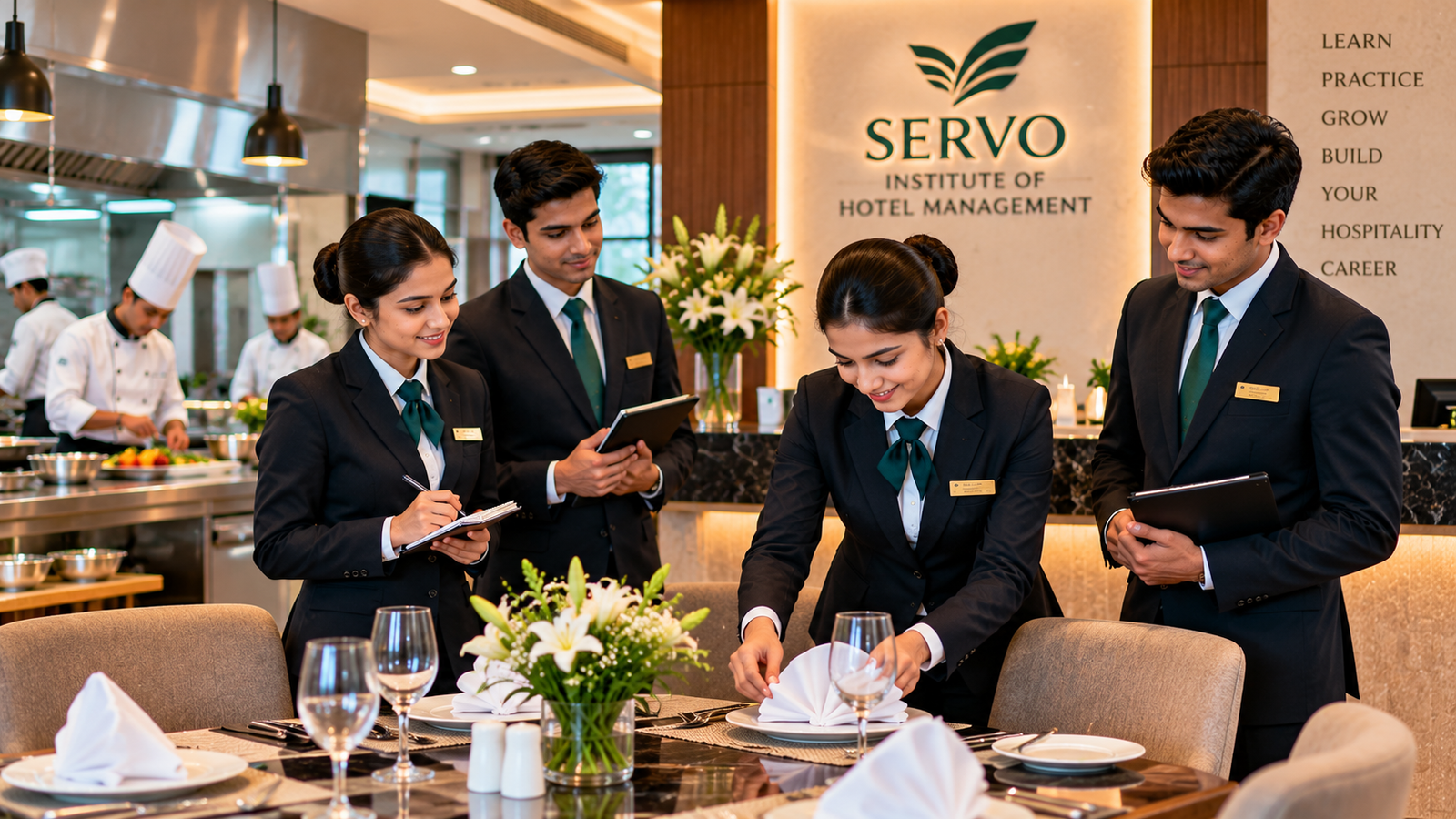
If you are interested in both, compare the course structure and practical components: subjects taught, eligibility, duration, total fees, qualification awarded and opportunities for industry exposure.
What to Check Before Choosing a Hotel Management Institute
Before taking admission, ask the institute these questions:
- What subjects and practical sessions are included in the curriculum?
- Are kitchen, front office and housekeeping training facilities available?
- Does the programme include an internship or industry training?
- What are the eligibility requirements and total course fees?
- Which qualification or certificate is awarded?
- What career guidance and placement assistance are provided?
Verify the qualification, awarding body and training arrangements directly with the institute, as these can differ between programmes.
Explore Courses at Servo Institute of Hotel Management
Students considering a hospitality career can explore the programmes at Servo Institute of Hotel Management in Dehradun. Start with the available courses and the short-term certificate programmes. For current fees and eligibility, visit the admissions page or the contact page. For campus updates, follow our Facebook Page.
Frequently Asked Questions (FAQs)
Q1. What is the difference between hotel management and culinary arts?
Q2. Is culinary arts part of hotel management?
Q3. Which course is better for students who love cooking?
Q4. Can I become a chef after studying hotel management?
Q5. Which career has better salary opportunities?
Q6. What should I check before taking admission?
Conclusion
Hotel management and culinary arts both offer pathways into the hospitality industry, but they serve different interests. Hotel management is a broader choice for students interested in hotel operations and guest experience, while culinary arts suits those who want to concentrate on cooking and food production. Compare the curriculum, practical training and career options before deciding.
Contact Servo Institute of Hotel Management
Talk to the admissions team for course details, counselling and admission guidance.